
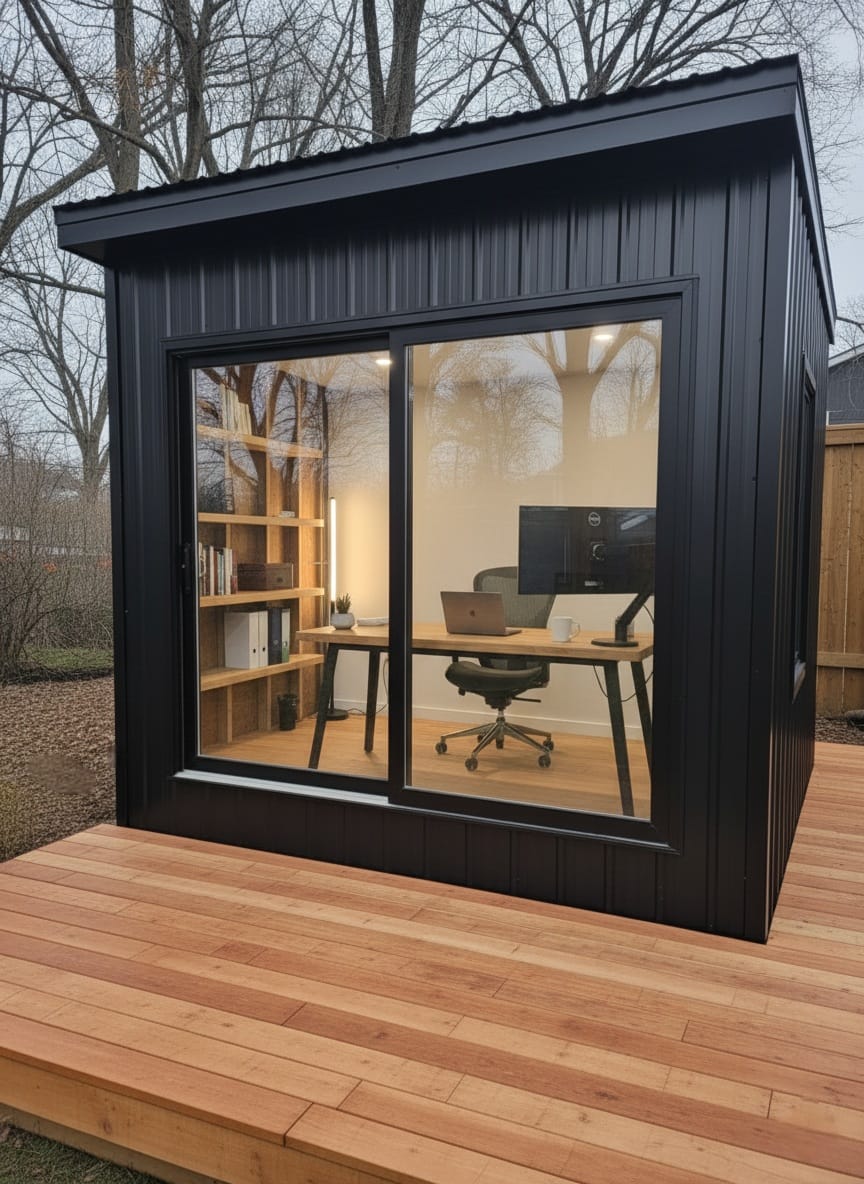
From Storage to Studio: The Evolution of the Garden Shed Office
The humble garden shed was once a place where lawnmowers went to rust and spiderwebs claimed dominion over stacks of terracotta pots. But over the last decade—and accelerated by a global shift toward flexible work—the shed has undergone a radical metamorphosis.
What was once a drafty storage box is now a high-tech, architecturally stunning “Shoffice” (Shed-Office). Here is how the backyard staple evolved from a place for tools to a sanctuary for productivity.
1. The Pre-Digital Era: The “Potting Shed”
Before the 21st century, the garden shed had a singular identity: utility. It was a masculine retreat for woodworking or a practical space for gardening. Comfort was an afterthought.
- Materials: Uninsulated pine, single-pane glass, and dirt or plywood floors.
- Climate Control: None (or a dangerous space heater).
- Connectivity: A single extension cord if you were lucky.
2. The Creative Spark: The Writer’s Hut
The “Studio” concept actually predates the modern tech office. Famous creators like Roald Dahl and Virginia Woolf knew the value of a detached garden room long before Zoom calls existed. They sought “the shed” not for storage, but for solitude. This planted the seed that a backyard structure could be a place of intellectual output.
3. The 2020 Pivot: Necessity Drives Innovation
The COVID-19 pandemic turned the garden shed from a luxury into a lifeline. When kitchen tables became crowded and bedrooms became “cubicles,” the backyard offered the only remaining frontier for a commute-free workspace.
- The DIY Boom: Homeowners began insulating, drywalling, and flooring their existing sheds.
- The Professional Rise: A new industry of “Prefab Studios” emerged, offering modular, permit-ready offices that can be dropped into a backyard in a single day.
The Anatomy of the Modern Garden Studio
Today’s garden offices are a far cry from their ancestors. They often rival the main house in terms of design and technology.
| Feature | Old School Shed | Modern Garden Studio |
| Connectivity | Zero / Weak Wi-Fi | Hardwired Fiber Optic / Mesh Systems |
| Walls | Raw Timber / Exposed Studs | Fully Insulated / Plasterboard / Soundproofing |
| Windows | Small / Fixed | Floor-to-ceiling Glass / Bi-fold Doors |
| Purpose | Storing the Mower | Coding, Therapy, Art, or Video Production |
Why the “Shed Office” is Here to Stay
The evolution isn’t just about aesthetics; it’s about the psychology of work.
- The Physical Commute: Walking 20 feet across a lawn provides a vital mental “boundary” between home life and work life.
- Biophilic Design: Working surrounded by greenery reduces cortisol levels and boosts creativity.
- Property Value: A high-end garden studio is now considered a “bonus room,” significantly increasing a home’s market appeal.
The Future: Off-Grid and Sustainable
We are now entering the next phase of the evolution: the Eco-Studio. Future sheds are being built with charred timber (Shou Sugi Ban), living green roofs, and solar panels that allow the office to run entirely independent of the main house’s power grid.
The garden shed has officially moved out of the “storage” category and into the “lifestyle” category. Whether you call it a shoffice, a pod, or a sanctuary, the evolution of this small space proves that you don’t need a corner office in a skyscraper to do your best work—you just need a quiet corner of the garden.